+

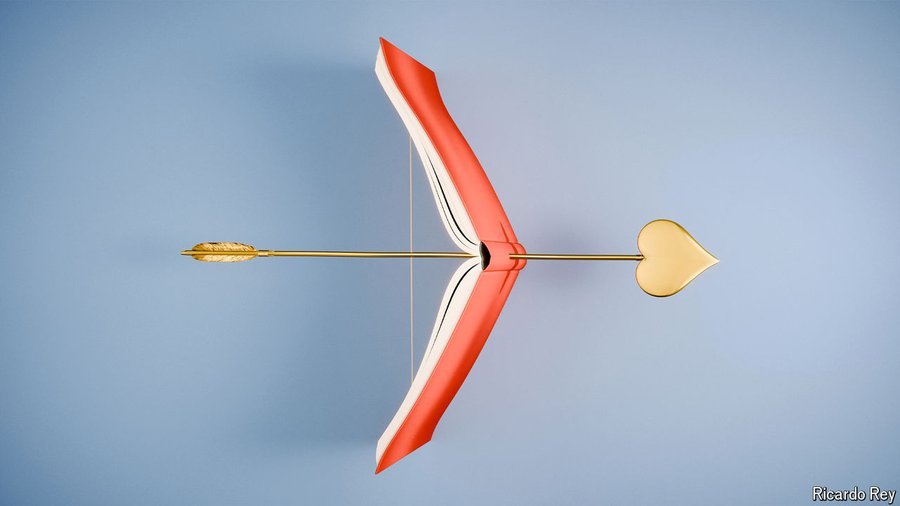

Perhaps it is Frodo’s hairy feet. Perhaps it is because orcs are not that erotic. Perhaps it is because too many characters sing songs containing words like “merry-o” and “deedle-dum-diddle”. Whatever the reason, one thing is clear: J.R.R. Tolkien’s “The Lord of the Rings” is rarely considered an erotic romp. Fantasy books generally are not. Harry Potter is a child; Aslan is an animal. And though books by writers such as Ursula Le Guin, of the “Earthsea” series, do contain sex, they also contain phrases in the vein of “the hormonal secretion is further stimulated”, which rarely set pulses racing. One exception is “A Game of Thrones”, which does contain lashings of sex. But since it also contains actual lashings, not to mention phrases such as “beat her bloody”, it is not usually considered romantic. Perhaps it is Frodo’s hairy feet. Perhaps it is because orcs are not that erotic. Perhaps it is because too many characters sing songs containing words like “merry-o” and “deedle-dum-diddle”. Whatever the reason, one thing is clear: J.R.R. Tolkien’s “The Lord of the Rings” is rarely considered an erotic romp. Fantasy books generally are not. Harry Potter is a child; Aslan is an animal. And though books by writers such as Ursula Le Guin, of the “Earthsea” series, do contain sex, they also contain phrases in the vein of “the hormonal secretion is further stimulated”, which rarely set pulses racing. One exception is “A Game of Thrones”, which does contain lashings of sex. But since it also contains actual lashings, not to mention phrases such as “beat her bloody”, it is not usually considered romantic. Fantasy is changing, because “romantasy”—the literary love-child of fantasy and romance—has arrived. Romantasy offers precisely what its portmanteau suggests: fornicating fairies and dragons that smoulder in more ways than one. Romantasy can be a mildly alarming read. Feminism, it turns out, is not a forte in fairyland. Male fairies can be domineering and violent, and have hands “like shackles”, which they use to pin women down. Perhaps even more troubling, in romantasy the word “fairy” is frequently spelt “faerie”. Which is faerlie irritating. That hardly matters, because romantasy is so successful. One of its most popular authors, Sarah J. Maas, has sold over 38m books worldwide. In bookshops, romantasies are starting to be moved from the shamefaced shelves at the back to the open tables at the front. Bookshops are slow off the mark. Romantasy, whose popularity has been fuelled by TikTok, a social-media app, has been sitting at the top of bestseller lists for months. Television has started to take notice, too. Amazon has bought the rights to work by Rebecca Yarros, a popular author; there has been talk that Ms Maas’s books could be made into a series by Hulu.