+

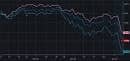

New York, NY — Global financial markets experienced a sharp and sudden crash in early August as mounting concerns over sovereign debt sustainability and a surprise interest rate hike from the U.S. Federal Reserve triggered a widespread selloff in equities, bonds, and commodities. On August 1, the S&P 500 fell 5.4%, its worst single-day performance since March 2020, while the Nasdaq plummeted 6.1%. European and Asian markets mirrored the drop, with the FTSE 100 losing 4.7% and the Nikkei 225 closing down 5.3%. The catalyst for the crash was the Federal Reserve’s unexpected decision to raise its benchmark interest rate by 75 basis points during an emergency meeting on July 31. The Fed cited persistent inflationary pressures, particularly in energy and food prices, and expressed concerns over the weakening U.S. dollar fueling import costs. Analysts were widely expecting rates to remain steady after a pause in June, making the move a shock to markets already grappling with liquidity concerns. “The market was caught completely off guard,” said Amanda Zhu, chief economist at Foresight Capital. “The sudden hike signaled panic rather than control, and investors reacted accordingly by dumping risk assets.” The situation was exacerbated by escalating fears of a sovereign debt crisis in emerging markets. Argentina, Turkey, and South Africa all reported soaring bond yields amid growing doubts over their ability to service dollar-denominated debt in the face of a stronger greenback and rising global borrowing costs. Cryptocurrencies also saw a steep drop, with Bitcoin falling below $25,000 for the first time since early 2024. As volatility surges, financial analysts and trading platforms are urging retail and institutional investors alike to proceed with caution. Traders are strongly advised to set strict stop-loss orders to prevent deeper losses, while long-term investors may consider partial or full withdrawals from high-risk positions to safeguard capital during this period of uncertainty. “Capital preservation should be the top priority right now,” warned David Lin, senior strategist at Orion Securities. “This is not the time to chase dips—this is the time to manage exposure and wait for clear signals of stabilization.” The U.S. Treasury has yet to comment on potential stabilization measures, but White House officials indicated that President Biden is monitoring the situation closely. Treasury Secretary Lael Brainard is expected to hold a press conference later this week. Markets remain volatile, and analysts warn that the situation could worsen unless central banks coordinate a global response or inflation data begins to improve.